Comments on Hunter
The boat is going to take a little getting used to, as I haven't paddled anything this narrow before, but she sure is fast! It is really a lot of fun in the water, and almost seemed more stable in chop and waves than on flat water. Very responsive to leans and edging. It is very maneuverable with the skeg up, and tracks like a train with the skeg down. Exaclty what I was hoping for.
Bruce Webb
Den Hunter jag började bygga i oktober blev klar lagom till det fina vårvädret. Utöver att jag tycker den är obeskrivligt vacker, upplever jag den som lättdriven och totalt okänslig för vind! Det känns befriande med det låga däcket, benutrymmet räcker väl till och den försänkta sargen ger bra stöd för knäna. Kajaken har också visat sig ha tillräcklig lastkapacitet för mina dagsturer i skärgården. Visst är den initialrank, men jag känner mig ändå trygg i den. Detta trots att min erfarenhet begränsar sig till en säsong i Kavat. Jag väljer dock grunda vatten tills vidare, eftersom jag inte behärskar roll ännu.
Rune Eurenius
I have to say, I thought it was going to look very sleek, but it has an even more elegant shape than I was hoping for. The higher deck, as per you plans, to my eye, did not compromise the aesthetic at all. It looks so good, on and off the water. Really, this must be one of the most attractive looking designs available ... Thanks Bjorn, for sharing your design with me, it was a real pleasure to build. It is everything I had hoped for, and more.
Etienne Muller
Bjorn, Thanks so much for the very detailed and interesting "tour" of your Greenland design. The design is so well balanced, and is a must for me when ever you have the plans ready for sale. I've been researching the various Greenland types, but yours is by far the most beautiful example I've seen with it's low,sleek, and subtle flair. You have managed to bring out the best of this type.
Tom Yost
What a fine looking AND handling kayak you've designed!! And fast, fast, fast...........After a couple of hours of roll practice (or trying and missing!), I was tired but still able to paddle and hold a 4.5 to 5 mph pace for an hour or so as as the sun set.
Tripp Stanley
eg ville bare si at jeg er utrolig fornøyd med Hunteren. Jeg har nå padlet med den i omtrent 40 km. I flatvann, vind, og litt større bølger.
Det er en utrolig rask båt, passer veldig bra for dagstur, og har bra stabilitet i bølger.
Nico Vertriest
I enjoy more and more Marbom, my Hunter […] she is almost perfect.
Nice to play and roll and faster than most kayaks around.
Guido Galbariggi
Hunter
Senast uppdaterad den 17 september 2025, 18 kommentarer
Bilder | Specifikationer | Mer om | Bakgrund och historia
Ritningssats, Hunter - 1 900 SEK
Beställ
Snabbtitt på prestanda

manöverbarhet |
kursstabilitet |
marschfart |

toppfart |

initialstabilitet |

slutstabilitet |
lastkapacitet |
Rekommenderad utrustning: justerbar skädda roder skott/luckor
Hunter är en mycket lång, låg, smal kajak, baserad på östgrönländska förlagor. Den är lättmanövrerad trots längden och reagerar direkt på minimala tyngdpunktsförskjutningar, lutningar mm, och har stor slutstyvhet som gör det lätt att snurra runt på ett högt stöd. Den är mycket lättrollad. Hunter är initialrank men har en trygg slutstyvhet som gör att man relativt snabbt vänjer sig:
...and almost seemed more stable in chop and waves than on flat water.
Bruce Webb, North Carolina
Våta ytan är liten vilket ger snabbhet i alla fartregister. Framför allt upplevs accelerationen mycket bra – ett par tre paddeltag till toppfart. Trots manöverbarheten är Hunter kursstabil i fart och är (tillsammans med Black Pearl, Njord och Frej) den minst vindkänsliga av mina kajaker. Måttlig lastvolym ställer lite krav på medveten packning.
Etienne Muller på Irland bygger en Hunter och visar projektet på sin Facebook-sida.
Specifikationer
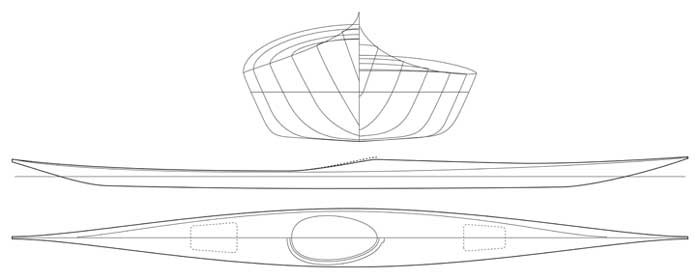
| Längd¹ |
590/491 cm (total/kvl) |
| Bredd |
51/47 cm (total/kvl) |
| Djupgående |
11 cm |
| Sittbrunn¹ |
78x38 cm |
| Innerhöjd¹ |
24,5/15 cm (framför/bakom sittbrunnen) |
| Vikt² |
16-21 kg |
| Deplacement/volym⁶ |
125 kg/230 liter |
| Fart³ |
7,9/11,3 km/h |
| Prismatisk koefficient |
0,55 |
| Våt yta |
1,86 m² |
| Släpmotstånd⁴ |
1,34/2,73 kp |
| Stabilitet⁵ |
2/4 (initial/slutstyvhet) |
| Användningsområde |
Advanced paddling, rockhopping,etc. Touring, coastal and deep sea. Day tours and exercise. |
¹ Dessa mått kan lätt ändras efter egna önskemål
² Beroende på träslag, utrustning, noggrannhet med slipning, laminering etc.
³ Marschfart resp. motsvarande toppfart. Värdena är från början teoretiskt uträknade (Crouch´s formel) och justerade efterhand som jag kan göra relevanta praktiska tester.
⁴ Släpmotståndet i 4 resp. 5 knop mätt i kp vid angiven lastkapacitet.
⁵ Initialstabilitet resp. slutstabilitet – 1 är mycket rank, 5 är mycket stabil.
⁶ Deplacement är kajak + paddlare + last. Räkna bort kajakens vikt för att få lastkapaciteten.
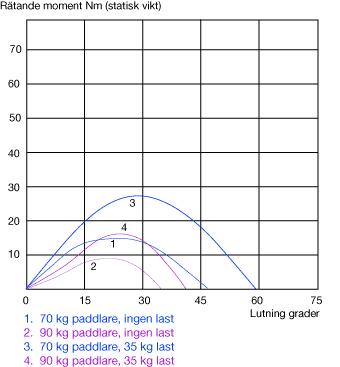
Stabilitet
Diagrammet visar beräknade stabilitetskurvor med en statisk last, och säger därför relativt lite om hur kajaken känns för en rörlig paddlare. Kurvan nära noll grader indikerar initialstyvhet (hur kajaken känns när den inte lutar) – ju brantare desto stabilare. Linjen strax till vänster om högsta punkten indikerar slutstyvheten. Ju högre och bredare toppen är desto tryggare känns kajaken att luta. Toppen visar också hur mycket kajaken kan luta utan att det känns instabilt. Kurvan till höger om toppen är svår att utnyttja – minsta misstag så slår man runt.
Om ritningar och bygge
Ritningsbladen rymmer den information som behövs för att bygga kanoten. Spant, stävar och eventuella konstruktionsdetaljer i fullskala. Linje- och konstruktionsritning i skala 1:10. Viktiga detaljer eller idéskisser i full skala. För kajaker finns sittbrunnsförslag plus anvisningar för att ändra. På ritningen finns även anvisningar för att bygga kajaken kortare eller längre.
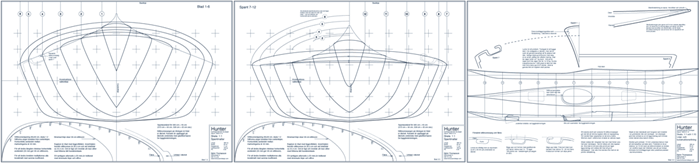
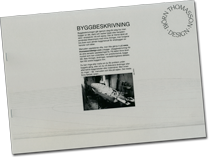 Med ritningssatsen följer en illustrerad byggmanual med 36 sidor, som går igenom alla moment – tillräckligt detaljerat för att även en helt ovan byggare skall klara av att bygga kajaken.
Ritningssats, Hunter - 1 900 SEK
Beställ
Minsta fönsterstorlek för att lyfta ut Hunter ur verkstaden:
52x28cm
Mer om Hunter
Hunter är baserad på de östgrönländska jaktkajakerna från början av 1900-talet och är precis som de låg, smal, lång och rakare i relingen än de äldre västgrönländska. Anledningen till att jag började intressera mig för just den modellen är att jag upptäckte fördelarna med smala ovinklade grönländska paddlar och blev naturligtvis nyfiken på om tillhörande kajak, hade lika mycket att erbjuda.
Hunter är mycket lång (585-590 cm beroende på hur vassa man gör stävarna). Däremot är vattenlinjelängden relativt liten, bara 491 cm. I låg fart är Hunter därför mycket lättsvängd. I högre fart klättrar bog- och häckvågen snabbt upp längs stävarna och ger en lång fartgivande vattenlinje med god kursstabilitet. Den smala och korta vattenlinjen innebär liten våt yta och minimal vågbildning. Accelerationen är blixtsnabb – ett par, tre paddeltag så är Hunter uppe i toppfart.
Ett skrov som Hunters bör enligt beräkningar ha högre marschfart (mindre våt yta) men lägre toppfart (mindre vattenlinjelängd) än t ex Nomad/Najad. Jämförande subjektiva tester (paddling tillsammans med erkänt snabba paddelkollegor) bekräftar fartresurserna, men visar också att Hunter är snabbare i medsjö genom att den är mycket lättsurfad.
Den smala vattenlinjen innebär också att Hunter är en ganska rank kajak. Totalbredden är 51 och bredden i vattenlinjen är 47 cm. Initialstabiliteten är relativt låg och den som kommer från en stabil kajak som Nomad eller Kavat får räkna med en ganska nervös provtur och att det känns rejält vingligt bara att sätta på kapellet. Men styvheten ökar snabbt med lutning och det känns inte som någon risk för kapsejsning. Det går också ganska snabbt att vänja sig vid den låga initialstyvheten (Hunter känns faktiskt totalt stabilare än t ex en VKV Anita) och efter några timmar känns den stabil och trygg. Den som är van vid initialstabila kajaker får en positiv överraskning i sjögång – eftersom vattenrörelser påverkar en rank kajak mindre än en stabil, gungar Hunter bara upp och ner i vågor där den stabilare kajaken kränger våldsamt. Likaså känns Hunter trygg i surf – den sjunker ner i sitt vågsystem och går stadigt och lättkontrollerat.
Bordläggningen är rak mellan slag och reling och jag har avstått från att runda relingen. Fördelen är att slutstyvheten är mycket god – det är lätt att hänga på ett högt stöd eller att vila med ryggen i vattnet. Den potentiella nackdelen med skarp relingskant är att paddeln inte kan föras lika nära kajaken som om man rundar relingen. Men med Hunters ringa bredd och låga reling är det inget problem – även med hög paddelföring kommer paddeln lika nära centerlinjen som i en motionskajak. Det finns helt enkelt ingen anledning att offra slutstyvhet genom att runda.
När Hunter kommer upp i fart och bog- och häckvågen klättrar upp längs stävarna, antingen på grund av kraftpaddling eller i surf, blir kajaken påtagligt stabilare - sannolikt beroende på att skrovformen passar perfekt i sitt eget vågsystem. Det var en för mig lite oväntad men mycket tilltalande egenskap, som visar hur hydrodynamiskt avancerad den ursprungliga eskimåkajaken var.
Hunter är extremt lättmanövrerad. Den plana botten, de inte helt skarpa slagen och den relativt korta vattenlinjen gör att kajaken svänger mycket lätt och reagerar direkt och mycket följsamt på tyngdpunktsförskjutningar och lutningar mm – den mest dansanta kajak jag ritat. (Uppdatering: Black Pearl är ännu mera följsam, liksom Frej).
Hunter är en låg kajak. Vid fotstödet är höjden bara 24,5 cm. Det kan tyckas lågt men om man sitter på eskimåvis med knäna lätt utåtvinklade, hälarna nästan ihop och fötterna utåtvinklade och en aning framåtlutade är det gott om plats även för fötter i 43-storlek. Eskimåerna på östra Grönland för hundra år sedan klarade sig med 18 cm höjd, men hade några storlekar mindre fötter. För den som har krav på mer plats finns ett högre fördäck markerat på ritningen (260 mm vid fotstödet).
Med prototypbygget provade jag ett par nya idéer som numera ingår i byggbeskrivningen: en nersänkt sittbrunnssarg, urfräst ur däcket – låg stark, elegant och lättbyggd och ett beslag efter en idé av en amerikansk byggare – även det helt nerfällt i däcket och mycket snabbtillverkat.
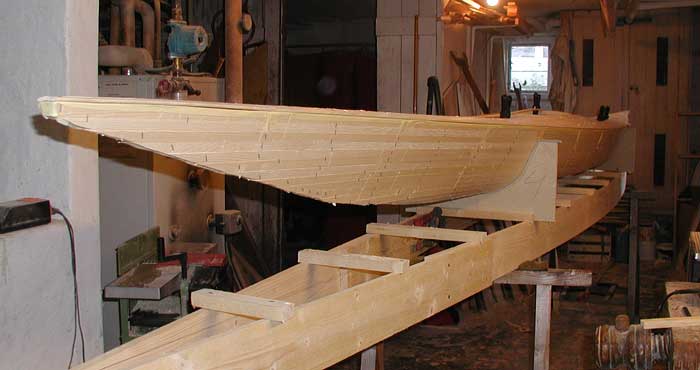
Skrovet färdighäftat...
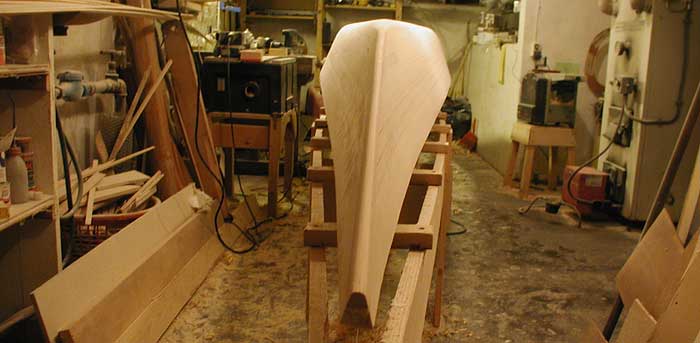
Skrovet färdigslipat – ytterstäv i lönn
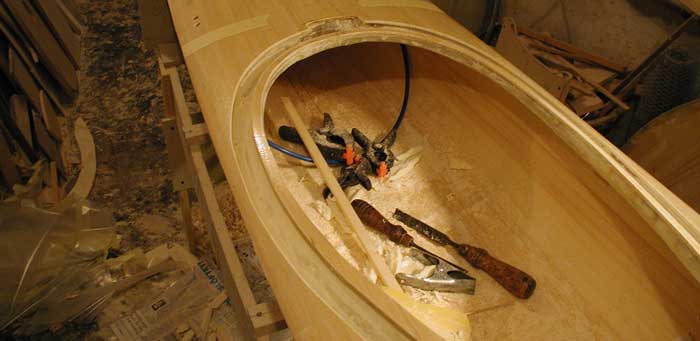 Nersänkt sittbrunnssarg
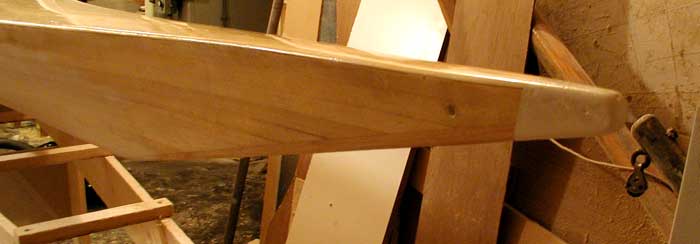
Stävspetsar med benimitation (epoxy plus microfiber och zinkvitt)
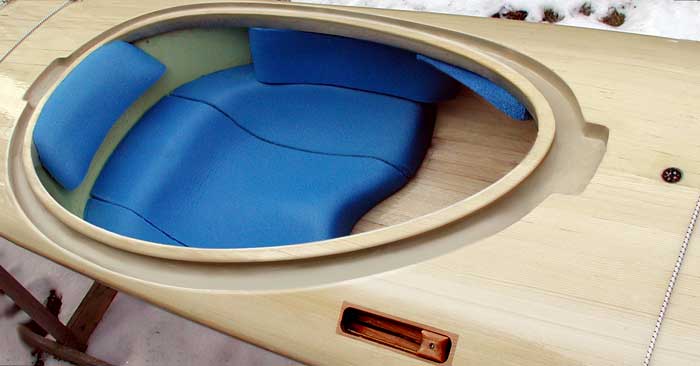
Sittbrunnsinredning – en av de mest komfortabla jag gjort (tredelad för att få ner genom sargen och för avrinning. Notera även den lilla infällda kompassen – perfekt när man glömt den riktiga kompassen hemma.
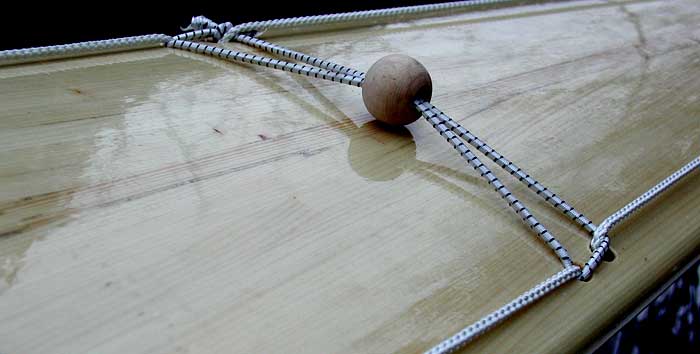
Däcksbeslag och linor. Träkulan underlättar paddelparkering.
För att välja att bygga Hunter tror jag att man skall ha lite paddelvana (eller ha stora ambitioner och mycket tålamod), man skall vara intresserad av snabba långturer med relativt lätt packning och en dragning åt kajakakrobatik, rockhopping och att utveckla sin paddelskicklighet.
Hunter – bakgrund och historia
Den östgrönländska kajaken i sin nuvarande form utvecklades ganska sent jämfört med den västgrönländska, men strax före förra sekelskiftet började den ersätta de tidigare typerna runt hela kusten. Jämfört med de äldre typerna var den smalare, längre, hade flackare stävar och rakare relingslinje. Den hade planare botten och mera utfallande sidor. I praktiken var den snabbare, framför allt mot vinden och manövrerade bättre. Initialstabiliteten var något lägre men slutstyvheten bättre. Den krävde mer av paddlaren men hade också mer att ge. Mer om grönländsk kajakhistoria.
När engelska tillverkare på 50-talet började intressera sig för grönlandskajaker kom förebilden att bli en kajaktyp Illorsuit strax norr om Diskobukten på västra Grönland. Det är denna som bland annat via Anas Acuta och Nordkapp kommit att stå modell för nästan hela den engelska kajakindustrin.
Jag valde i stället att basera min Hunter på östgrönländska kajaker när jag genom referenser i olika böcker blev nyfiken på deras egenskaper: snabba (framför allt i motvind) och lättmanövrerade. När de återupptäcltes efter östgrönlands isolering under den så kallade lilla istiden, har de kommit att påverka utvecklingen på hela Grönland, och i synnerhet de rollkajaker som numera används i de Grönländska kajakmästerskapen.
Min Hunter, ritad 2002, är ingen historisk replik. Redan att välja stripbygge är en stor avvikelse. Dessutom är originalet så lågt att en västerlänning skulle behöva kunna böja knäna åt fel håll för att få in benen under däcket. Min kajak är därför höjd ca 5 cm framför sittbrunnen. Jag har också breddat vattenlinjen en aning för att behålla originalets stabilitet – västerlänningar är generellt längre än eskimåer och får tyngdpunkten högre upp.
Namnet Hunter är valt för att den östgrönländska kajaken sannolikt är den bästa jaktkajak som någonsin byggts.


