Najad
Senast uppdaterad den 4 januari 2025, 19 kommentarer
Bilder | Specifikationer | Mer om | Bakgrund och historia
Ritningssats, Najad - 1 900 SEK
Beställ
Snabbtitt på prestanda

manöverbarhet |

kursstabilitet |

marschfart |
toppfart |
initialstabilitet |

slutstabilitet |
lastkapacitet |
Rekommenderad utrustning: justerbar skädda roder skott/luckor
Najad är i grunden samma kajak som Nomad, trots skillnaderna i utseende. Anledningen till att jag ritade Najad är att några byggare hade hört av sig med liknande önskemål – en Nomad avsedd för roder, med lite högre fördäck för att få mer plats för knän och fötter, lägre akterdäck för att kunna luta sig längre bakåt vid rollar och en lite uppsvängd förstäv för att bryta vågorna i med- och motsjö.
Utformningen av stävarna gör att upplovningen i sidvind minskar något, men också att det blir svårare att gira upp i vind. Det lägre akterdäcket gör det svårare att packa från sittbrunnen – Najad bör byggas med skott och luckor. Den högre förstäven gör att Najad går något torrare än Nomad men också att den bromsas upp lite mer i motsjö (men skillnaden är marginell).
Najad är konstruerad med mer kursstabilitet än Nomad och bör förses med roder för att vara riktigt hanterbar.
En kommentar från en byggare i Norge:
Hei Bjørn! Min Najad er ferdig! Oj, oj, oj for en båt. Den har presis de egenskapene jeg var ute etter. Hurtig ekspedisjonsbåt – konseptet fungerer perfekt. Rask, god lastekapasitet, veldig stabil, optimalisert for ror, gunstig for konkuransepadling og vingåre. Dette er en havkrysser, jeg er meget fornøyd.
...och en till:
Jeg er en alminnelig fyr på 175cm og 57 år gammel, jeg padler raskere med Najad en med andre kajakker. Jeg får 12,3-12,4 km/t på Najaden når det er flatt og uten strømninger. Jeg ser da at kajakken ikke bygger bølger rundt forskipet, det ser veldig bra ut. (Under litt gunstige forhold har jeg vært over 13 km/t)
Toppfarten holder ikke lenge men jeg kan holde 9 km/t i ca. 1 mil. (8,4 i snitt på 23 km)
10 km/t går bra i ca. 1 km.
Najad er den kajakken jeg padler raskest med under alle forhold.
... och från Nya Zeeland:
The design more than lived up to expectations. The first thing I noticed was the speed of the kayak, my normal touring speed has now gone from an average of 7km per hour to 8.5km. The Najad carves a turn better then any other kayak I've paddled and despite it being a calm day it breezed through the occasional 20knt gusts without any noticeable weather cocking even with the rudder up. The kayak also rolls well and I could do my all my GP rolls without a problem. Unfortunately, I could only find boat wakes to surf today but it handled them well.
Fler recensioner på Utsidan.
Specifikationer
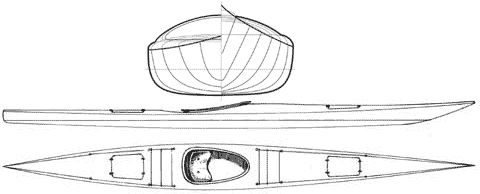
| Längd¹ |
580/541 cm (total/kvl) |
| Bredd |
55/53 cm (total/kvl) |
| Djupgående |
11 cm |
| Sittbrunn¹ |
80x40 cm |
| Innerhöjd¹ |
28,5/20 cm (framför/bakom sittbrunnen) |
| Vikt² |
18-23 kg |
| Deplacement/volym⁶ |
150 kg/400 liter |
| Fart³ |
7,6/12,4 km/h |
| Prismatisk koefficient |
0,57 |
| Våt yta |
2,32 m² |
| Släpmotstånd⁴ |
1,7/3,08 kp |
| Stabilitet⁵ |
4/5 (initial/slutstyvhet) |
| Användningsområde |
Långfärd till havs, längs kusten, i skärgård, i sjö eller älv. Motion och dagstur. |
¹ Dessa mått kan lätt ändras efter egna önskemål
² Beroende på träslag, utrustning, noggrannhet med slipning, laminering etc.
³ Marschfart resp. motsvarande toppfart. Värdena är från början teoretiskt uträknade (Crouch´s formel) och justerade efterhand som jag kan göra relevanta praktiska tester.
⁴ Släpmotståndet i 4 resp. 5 knop mätt i kp vid angiven lastkapacitet.
⁵ Initialstabilitet resp. slutstabilitet – 1 är mycket rank, 5 är mycket stabil.
⁶ Deplacement är kajak + paddlare + last. Räkna bort kajakens vikt för att få lastkapaciteten.
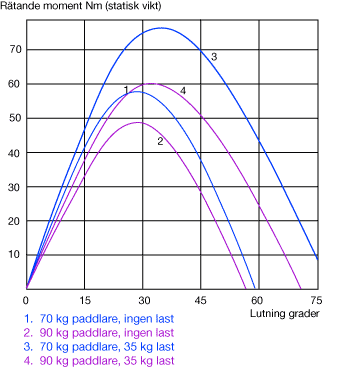
Stabilitet
Diagrammet visar beräknade stabilitetskurvor med en statisk last, och säger därför relativt lite om hur kajaken känns för en rörlig paddlare. Kurvan nära noll grader indikerar initialstyvhet (hur kajaken känns när den inte lutar) – ju brantare desto stabilare. Linjen strax till vänster om högsta punkten indikerar slutstyvheten. Ju högre och bredare toppen är desto tryggare känns kajaken att luta. Toppen visar också hur mycket kajaken kan luta utan att det känns instabilt. Kurvan till höger om toppen är svår att utnyttja – minsta misstag så slår man runt.
Om ritningar och bygge
Till Najad går det åt ungefär 320 löpmeter ribb (20x5 mm) inklusive marginal för spill och ett och annat misstag mm, 18 meter glasfiberväv (ca 160 gr/m2 på 100 cm bredd). Epoxyåtgången är svårare att ange eftersom den till stor del beror på hur den appliceras, men ungefär 6 kg är ett rimligt riktvärde. Värdena gäller om du bygger enligt ritningen – ändrar du längd eller annat måste du såklart justera åtgången proportionellt.
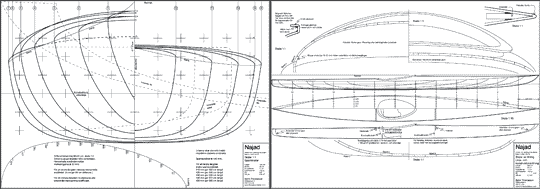
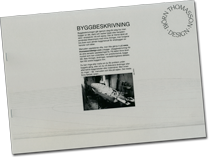 Med ritningssatsen följer en illustrerad byggmanual med 36 sidor, som går igenom alla moment – tillräckligt detaljerat för att även en helt ovan byggare skall klara av att bygga kajaken.
Ritningssats, Najad - 1 900 SEK
Beställ
Minsta fönstermått för att lyfta ut den färdiga kajaken: 56x30 cm
Mer om Najad
Se Nomad för mer information
Bakgrund och historia
Najad, ritad 1998, hamnade på ritbordet efter en hel del frågor om en "uppnäst" Nomad. I bästa fall är väl anledningen att man tycker att uppsvängda stävar är snygga men tyvärr tror många att uppsvängda stävar är det enkla och säkra tecknet på att en kajak är användbar till havs.
Det kom också mer nyanserade önskemål -– Nomads skrov och egenskaper, men lite högre fördäck för att få mer plats för knäna och fötter och för att kunna minska sittbrunnsöppningens storlek utan att det blir svårt att ta sig i, lägre akterdäck för att kunna luta sig längre bakåt vid rollar, högre förstäv för att bryta vågorna i med- och motsjö och slutligen en akterstäv, lätt att anpassa för rodermontage.
Utformningen av stävarna gör att upplovningen i sidvind minskar något, men också att det blir svårare att gira upp i vind. Det lägre akterdäcket gör det svårare att packa från sittbrunnen – Najad bör byggas med skott och luckor. Den högre förstäven gör att Najad går torrare än Nomad (skillnaden är mycket liten eftersom vattnet rinner av det långa fördäcket innan det når sittbrunnen) men också att den bromsas upp lite mer i motsjö.
Utformningen av akterskeppet gör det lätt att montera roder (många olika typer passar – både egna byggen och köpta rodersystem) men innebär också att kursstabiliteten är betydligt "bättre" (på gott och ont) än Nomads. Det innebär i praktiken att Najad bör förses med roder för att fungera riktigt bra. Därmed är Nomad och Najad två helt olika kajaker trots gemensamt ursprung och vänder sig följaktligen till paddlare med olika paddelfilosofier.


