Havsracer
Senast uppdaterad den 4 januari 2025, 92 kommentarer
Bilder | Specifikationer | Mer om | Bakgrund och historia
Ritningssats, Havsracer - 1 900 SEK
Beställ
Snabbtitt på prestanda

manöverbarhet |

kursstabilitet |
marschfart |

toppfart |
initialstabilitet |

slutstabilitet |
lastkapacitet |
Rekommenderad utrustning: roder skott/luckor
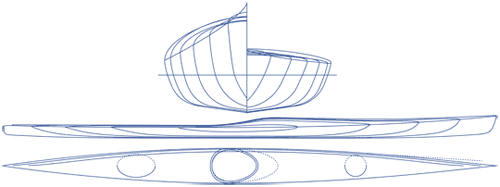
Havsracern är inspirerad av Martin Leonard III och hans Arctic Cheetah och tänkt för tävlingar och turer med lätt packning. Den är mycket smal och lång (dock inte riktigt så extrem som Cheetah - modet svek där eller kanske snarare: jag hade nog inte fått plats) – 598x42 cm och utformad med minimal våt yta, mycket hög PC (0,62) och avsevärd bärighet långt ut i ändskeppen för att klara grov havssjö.
Den är tänkt för roder - en så lång och smal kajak blir svårhanterad annars. Rodret kan vara ett vanligt påhängsroder (t ex Seal-Line), ett integrerat roder eller ritningens nykonstuerade infällbara underliggande tävlingsroder (hittills oprövat). Byggd som vanligt med trästrip/glasfiber/epoxi men med grafitbotten - några lager grafitpulver i epoxi plus polering så att grafiten ligger exponerad. Tanken är att få ett relativt tåligt ytskydd med också minimal friktion - främst vid kontakt med stenar och grynnor men förhoppningsvis också mot vattnet.
Sittbrunnen är ritad i min favoritstorlek 53x38 cm och höjdskillnaden är tillräckligt stor mellan för och akterdäck för att göra det lätt att snabbt glida på plats – men tanken är att kajaken skall vara lättrollad och med reentry-och-roll som huvudsaklig räddningsmetod. Däcket är betydligt lägre än på vanliga racers – jag är numera van att använda knäna mer än fötterna för att få kraft i paddlingen. Men självklart är det lätt att lyfta fördäcket (en högre däckslinje finns indikerat på ritningen) för den som vill ha plats att hala upp knäna lite mer. Likaså finns en stor sittbrunn indikerad och den som vill kan enkelt förlänga eller förkorta kajaken.
Kajaken är enligt de hydrodynamiska beräkningar lite rankare än Black Pearl - men skillnaden är mycket mindre än jag trodde när jag knappade in dimensionerna. Kajaken är faktiskt stabilare initialt än många multisportkajaker och surfskis på marknaden – men trots det snabbare än många. Den första byggdes av en ambitiös nybörjare som klarade kajaken från början utan att välte – "lite vinglig" var den förstås initialt. Havsracern går generellt bra i vågor, men ett par byggare har konstaterat att den blir vinglig i kort krabb sjö – till exempel i flodmynningar där tidvatten och vind möter ström. När det långa skrovet lyfts på två vågor med paddlaren hängande i mitten blir det rejält rankt. Bäst är nog antingen plattvatten eller långa vågor, 6 meter eller mer.
Om racern används försiktigt kan den byggas mycket lätt. Lättast hittills (vad jag vet) är Matthias Jakubeks mycket vackra Sea Racer på 11.8 kg (se bilderna nedan).
Det finns ännu så länge inga riktiga fartdata från havsracern – men en första jämförande test gjordes i ett kommersiellt syfte: mot en välkänd multisportkajak med liknande mått och en halvmetern längre och mycket framgångsrik surfski. Testarna – duktiga racingpaddlare – upplevde havsracern för stabil för att förvänta några större fartresurser, och blev därför överraskade av att den, beroende på vågorna, antingen höll jämna steg eller drog ifrån de båda konkurrenterna och ännu mer av att den gick torrare i vågor än multisportkajaken (surfskin fick en roderskada och var inte med ute i vågorna). Det bekräftar en av mina gamla kontroversiella övertygelser – att fart och stabilitet inte nödvändigtvis behöver utesluta varandra.
"I christened the boat Artemis II yesterday and took it for a spin, all I can say is wow, it is extremely efficient and flys with little effort. Having moved to this kayak from a 24 inch beam Granita design S&G I was concerned about stability but I stayed dry and found initial and secondary stability to be fantastic for such a narrow hull. According to my wife the craft leaves very little wake, a sign of the efficiency I was looking for. Drivers passing the lake stopped in the middle of the road to watch me paddle and were amazed by the lines of your beautiful design."
Chris Luedke
Specifikationer
| Längd¹ |
598/588 cm (total/kvl) |
| Bredd |
43/41 cm (total/kvl) |
| Djupgående |
9 cm |
| Sittbrunn¹ |
53x38 cm |
| Innerhöjd¹ |
25/14 cm (framför/bakom sittbrunnen) |
| Vikt² |
15-20 kg |
| Deplacement/volym⁶ |
115 kg/263 liter |
| Fart³ |
9,8/14,9 km/h |
| Prismatisk koefficient |
0,57 |
| Våt yta |
2,03 m² |
| Släpmotstånd⁴ |
1,35/2,29 kp |
| Stabilitet⁵ |
1/2 (initial/slutstyvhet) |
| Användningsområde |
Tävling, motion, snabb turpaddling med lätt packning längs kusten eller i öppet hav. |
¹ Dessa mått kan lätt ändras efter egna önskemål
² Beroende på träslag, utrustning, noggrannhet med slipning, laminering etc.
³ Marschfart resp. motsvarande toppfart. Värdena är från början teoretiskt uträknade (Crouch´s formel) och justerade efterhand som jag kan göra relevanta praktiska tester.
⁴ Släpmotståndet i 4 resp. 5 knop mätt i kp vid angiven lastkapacitet.
⁵ Initialstabilitet resp. slutstabilitet – 1 är mycket rank, 5 är mycket stabil.
⁶ Deplacement är kajak + paddlare + last. Räkna bort kajakens vikt för att få lastkapaciteten.
Stabilitet
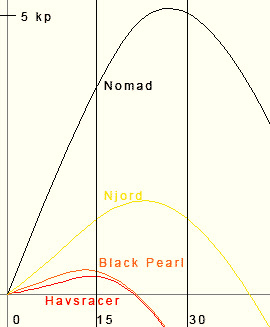
Diagrammet visar beräknade stabilitetskurvor med en statisk last, och säger därför relativt lite om hur kajaken känns för en rörlig paddlare. Kurvan nära noll grader indikerar initialstyvhet (hur kajaken känns när den inte lutar) – ju brantare desto stabilare. Linjen strax till vänster om högsta punkten indikerar slutstyvheten. Ju högre och bredare toppen är desto tryggare känns kajaken att luta. Toppen visar också hur mycket kajaken kan luta utan att det känns instabilt. Kurvan till höger om toppen är svår att utnyttja – minsta misstag så slår man runt.
Om ritningar och bygge
Till Havsracern går det åt ungefär 290 löpmeter ribb (20x5 mm) inklusive marginal för spill och ett och annat misstag mm, 18 meter glasfiberväv (ca 160 gr/m2 på 100 cm bredd). Epoxyåtgången är svårare att ange eftersom den till stor del beror på hur den appliceras, men ungefär 6 kg är ett rimligt riktvärde. Värdena gäller om du bygger enligt ritningen – ändrar du längd eller annat måste du såklart justera åtgången proportionellt.
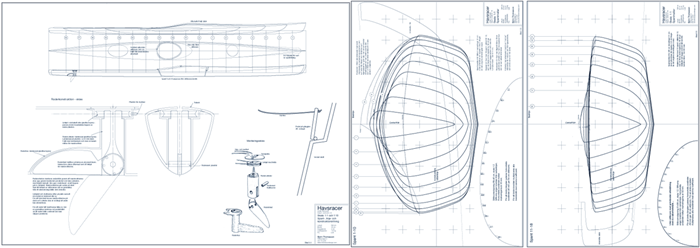
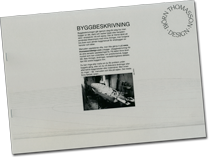 Med ritningssatsen följer en illustrerad byggmanual med 36 sidor, som går igenom alla moment – tillräckligt detaljerat för att även en helt ovan byggare skall klara av att bygga kajaken.
Ritningssats, Havsracer - 1 900 SEK
Beställ
Minsta fönstermått för att lyfta ut den färdiga kajaken: 43x29 cm
Mer om havsracern
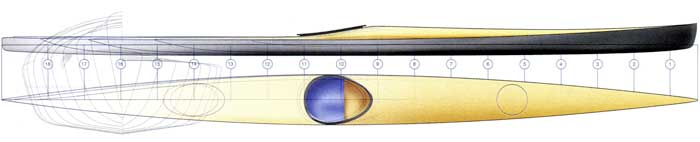
Det här projektet har legat i datorn från och till under lite drygt ett år - tagits fram och putsats på då och då. Bland annat har jag gjort en stor mängd datorkörningar av fart och stabilitetsdata, letat efter sätt att öka farten utan att förlora alltför mycket stabilitet. Det har inneburit att jag vridit och vänt på alla parametrar, testat både rimliga och orimliga idéer - och sakta men säkert fått ner både friktion och vågbildningsmotstånd till lägre värden än jag någonsin fått förut, samtidigt som jag lyckats hålla stabiliteten uppe något så när (för att vara en tämligen extrem racer).
I stabilitetsdiagrammet ovan finns Nomad, Njord och Black Pearl med som jämförelse. Intressant att notera att initialstabiliteten bara är marginellt sämre än Black Pearls och att slutstyvheten är ungefär densamma, vilket känns väldigt bra för en kajak som är 41 cm bred i vattenlinjen (längden kompenserar en del)! 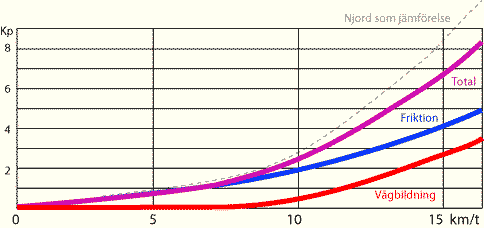 Samtidigt är den våta ytan bara strax under 2 kvadratmeter, vilket också känns rätt för en 6 m lång kajak.
Diagram över friktions- och vågbildnings-motstånd. Den streckade grå linjen är Njords totala motstånd som jämförelse.
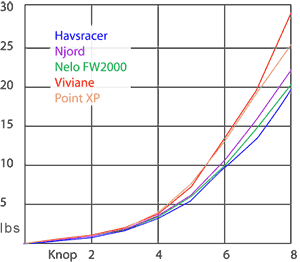 Här är en jämförelse av totala motståndet i olika farter. Data är inlagda i KAPER (det beräkningsunderlag som de flesta testtidskrifter, t ex Sea Kayaker, använder), tillsammans med några välkända kajakers värden. Att havsracern slår Viviane och XP är inte förvånande, men att den får lägre totalt motstånd än Nelo FW2000 i alla farter är lite underligt. Kan det stämma? Nej, det är tveksamt. Kaper är en erfarenhetsbaserad beräkningsalgoritm utformad av John Winters och justerad för kajaker med mått runt 500x60 cm. För sådana är värdena relativt pålitliga, men ju längre från normen man kommer desto större blir felen. Jag kan tänka mig att den kortare Nelon vinner på slätvatten, men i sjögång är det en helt annan sak. De första ovetenskapliga testerna verkar bekräfta mätningarna men framtiden får utvisa…
Bakgrund och historia
Havsracern, ritad i April 2006, är inspirerad av Martin Leonard III och hans Arctic Cheetah och tänkt för tävlingar och turer med lätt packning.


